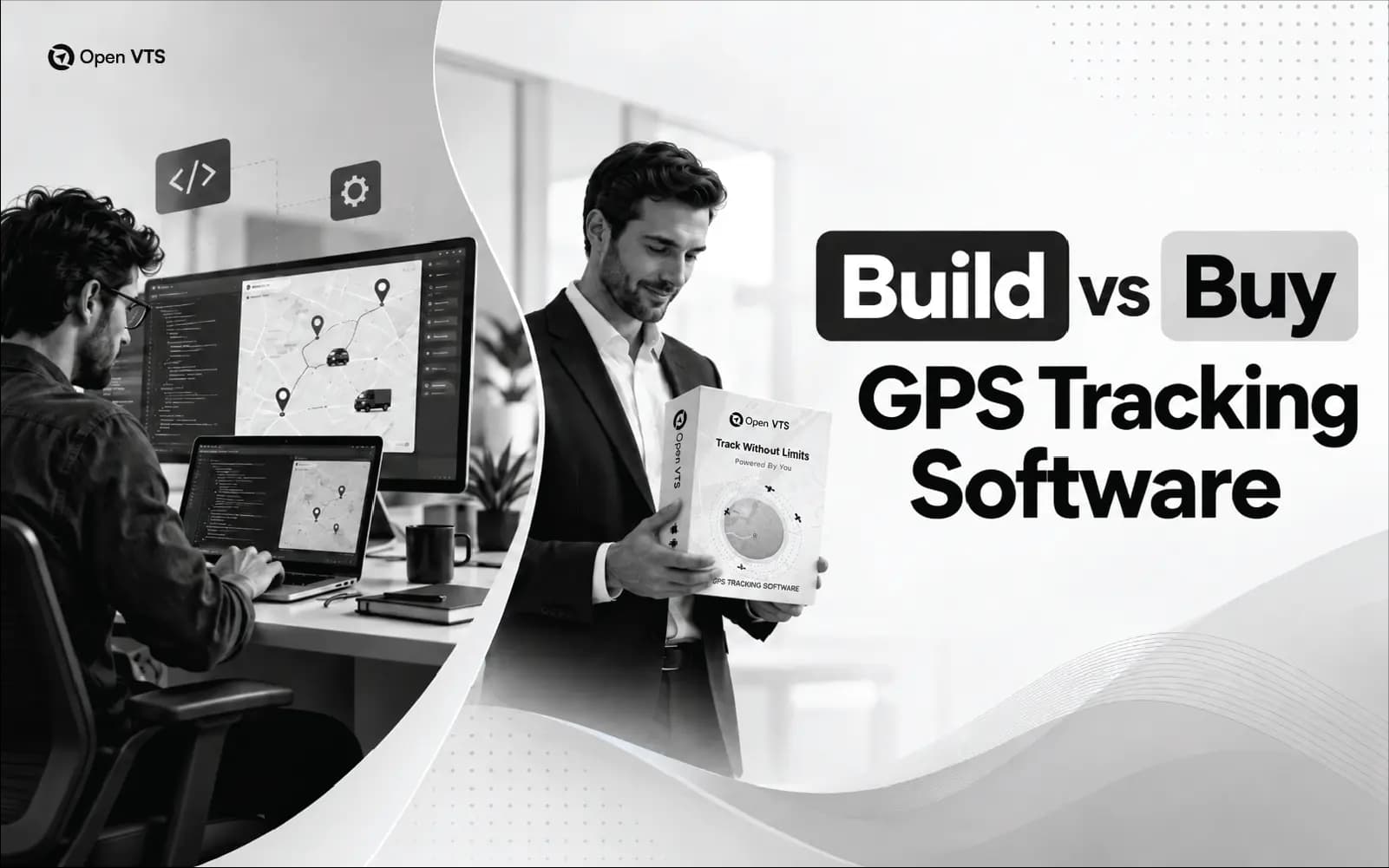
Build vs. Buy GPS Tracking Software: 12-Month Engineering, Cost, Time, Risk & Ownership Comparison
Introduction: One Business Decision, Two Different Paths
Starting a GPS tracking business creates an immediate question: should you build the software or deploy an existing platform? Both approaches can deliver vehicle visibility, but they demand very different investments. This guide compares the engineering work, first-year costs, launch timeline, operational risks, and control involved so you can invest in the capabilities your business actually needs.
Build vs. Buy GPS Tracking Software: What's the Difference?
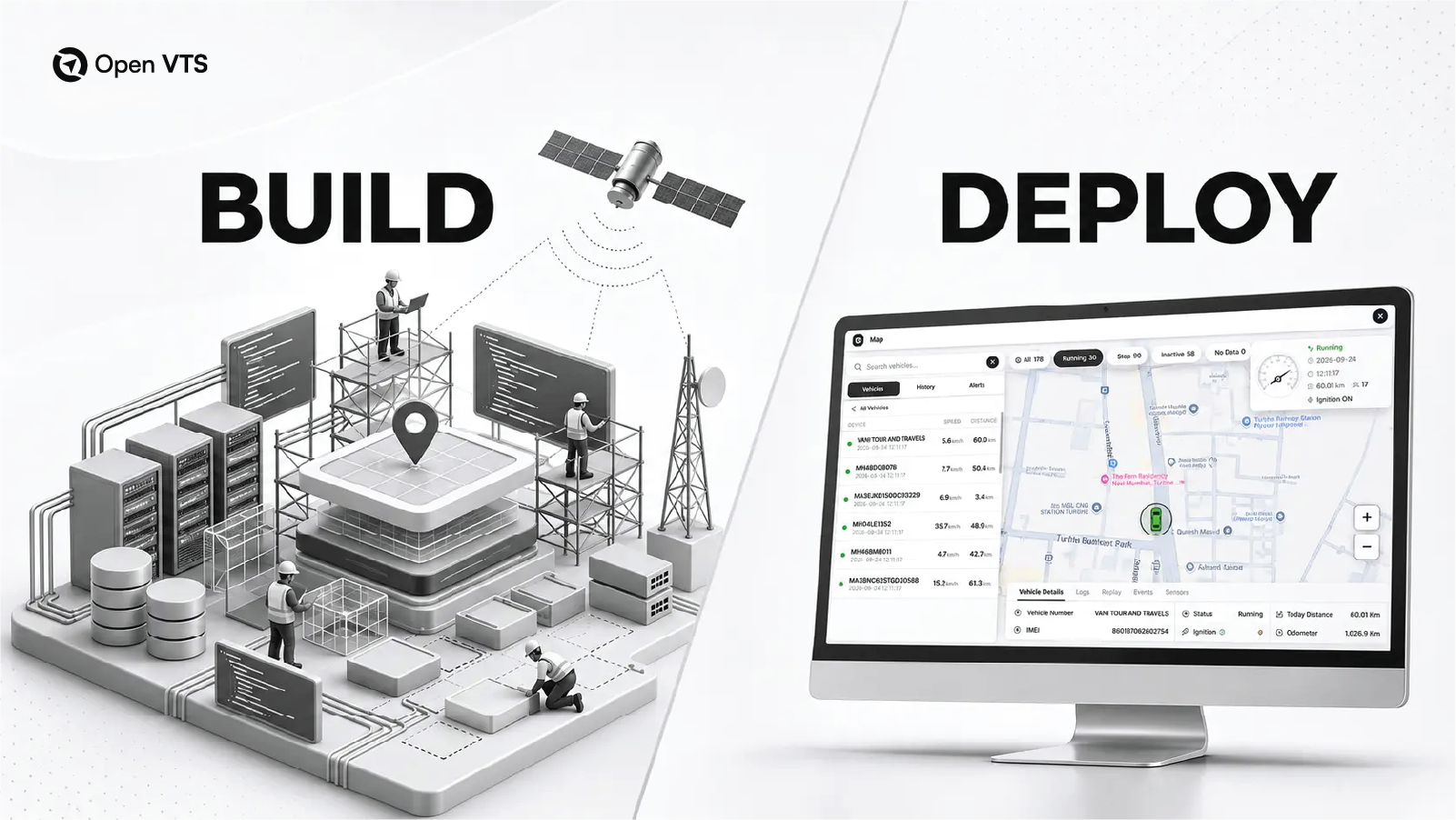
Building means developing and maintaining your own tracking system, including its device communications, backend, interface, and mobile applications. Buying means licensing existing software and configuring it for your operation. Buying is not one model: vendor-hosted SaaS, hosted white-label services, and self-hosted licensed software offer different levels of infrastructure control, customization, and dependence on the provider.
Know Your Business Before Making the Decision
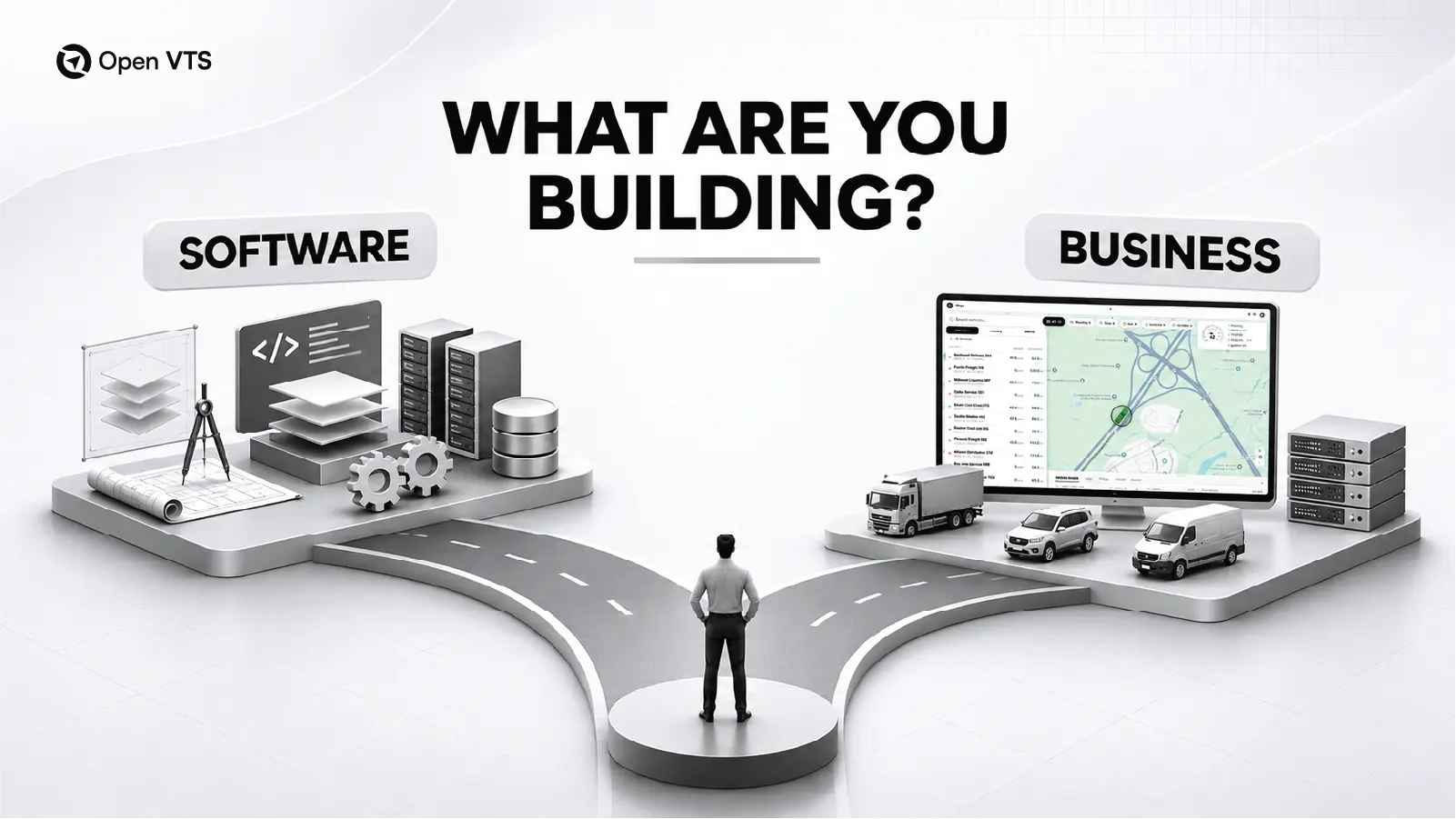
A GPS software company creates technology to sell, license, or differentiate through proprietary engineering. A GPS tracking service provider sells tracking solutions, device installation, customer support, and fleet visibility. A fleet owner primarily wants to manage vehicles, drivers, and operations. The central question is whether developing tracking software creates your competitive advantage or delays the business you intended to run.
When Should You Build GPS Tracking Software?
Build when proprietary technology is your product, or when requirements cannot reasonably be met through existing platforms and integrations. Examples include novel telematics analytics, specialized hardware protocols, or deeply customized workflows. Building offers substantial design freedom and potentially ownership of the code your team creates, but only if employment and contractor agreements assign the intellectual property correctly.
What Resources Are Required to Build a GPS Tracking Platform?
A commercial system needs more than a moving vehicle icon. Core work includes TCP/UDP device listeners, protocol decoding, telemetry processing, databases, live maps, playback, geofences, alerts, reports, customer accounts, permissions, APIs, security, backups, and mobile applications. A development team typically needs backend, frontend, and mobile expertise, plus database/DevOps and quality assurance support. Each new device protocol and production incident can generate continuing engineering work.
The First 12 Months: An Illustrative Engineering Timeline
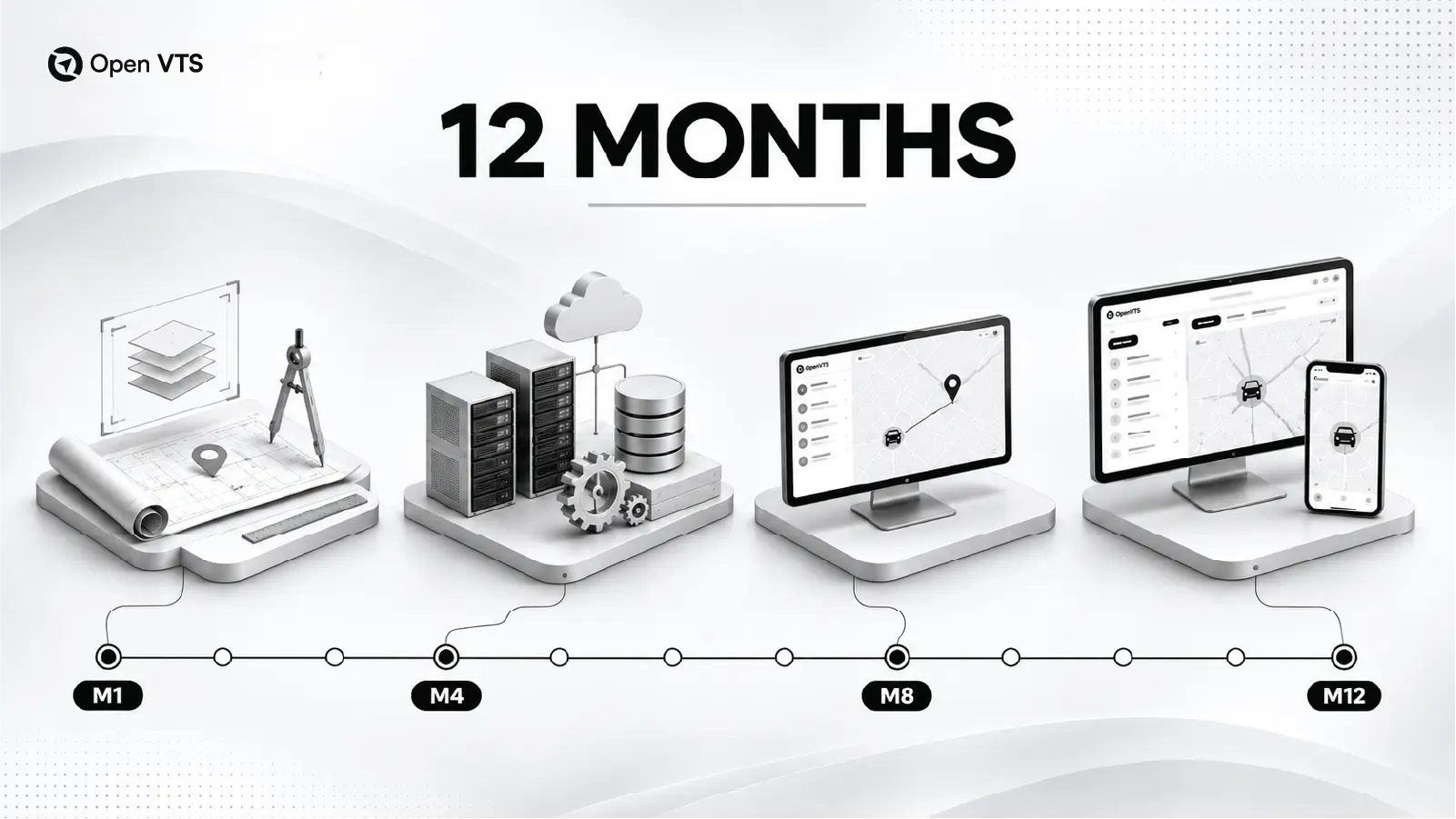
For a new, multi-customer platform, a planning scenario might allocate months 1–2 to architecture and requirements; 3–5 to device ingestion, storage, and core interfaces; 6–8 to reporting, mobile access, and customer management; and 9–12 to integration testing, security, load testing, and stabilization. This is an illustrative schedule, not an industry benchmark or promise of feature-complete delivery. Complex integrations can extend the timeline significantly.
When Should You Buy GPS Tracking Software?
Buying is often more practical when your revenue comes from subscriptions to tracking services, hardware sales, fleet operations, or customer relationships not software engineering. An existing platform reduces initial development work and can shorten the route to a pilot. Evaluate device compatibility, support, data portability, licensing conditions, and the provider's update policy before committing.
What Do You Need to Launch a Purchased Platform?
With a self-hosted product such as Open VTS, start with a suitable server, public IP and networking, the software package, and administrator access. Add a domain and SSL for production use, configure your business identity, create accounts, and connect compatible GPS trackers with data-enabled SIM cards. The engineering project becomes a deployment and validation process, although server security, backups, and daily operations remain your responsibility.
Build vs. Buy: The Real 12-Month Cost Comparison
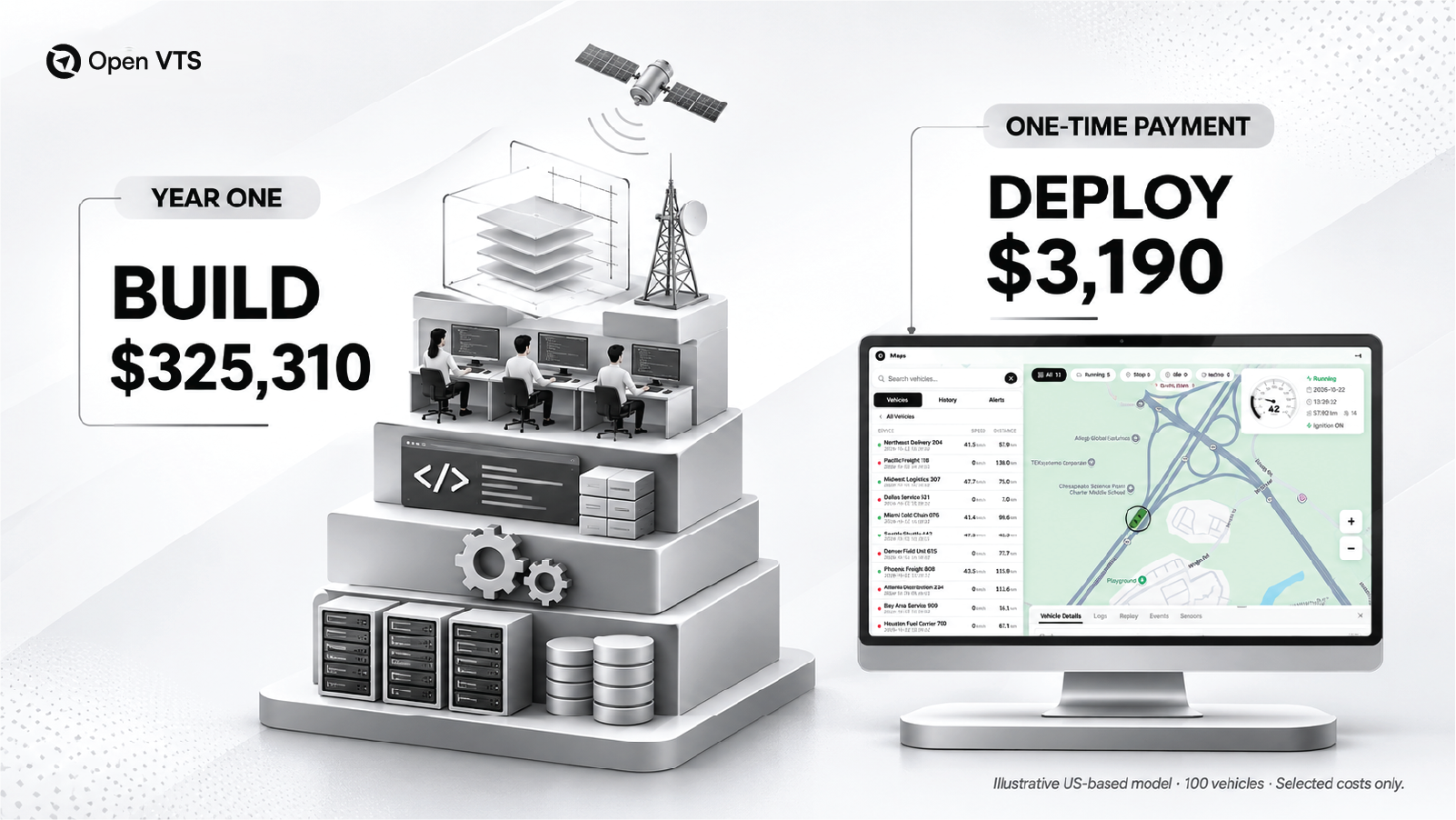
Consider a US-based illustrative team of two full-time software developers and one half-time QA professional. US Bureau of Labor Statistics May 2025 median annual wages were $135,980 for developers and $104,300 for QA analysts/testers. That makes $324,110 in annual base wages alone, before benefits, management, tools, and other engineering costs. It does not guarantee a complete platform in 12 months.
For a comparable 100-vehicle deployment, assume $100 monthly server hosting for either approach. This is a budgeting assumption, not a verified capacity recommendation:
| First-year expense | Build from scratch | Deploy Open VTS |
|---|---|---|
| Engineering base wages | $324,110 | $0 for platform development |
| Software license | Developed internally | $1,990 Growth |
| Illustrative hosting | $1,200 | $1,200 |
| Modeled first-year subtotal | $325,310 | $3,190(one time) |
Open VTS Pricing also lists Free ($0, up to 50 vehicles), Scale ($3,990, up to 2,500), and Enterprise ($6,990, no licensed vehicle ceiling). You pay one time in life. These figures exclude hardware, SIMs, domains, third-party services, deployment labor, and ongoing operational overhead; hosting needs vary by workload. Prices should be checked before purchase.
Cost Is Only Half the Decision: Time, Risk, Control & Ownership
Building provides greater control over product architecture and roadmap, but brings delivery, hiring, security, maintenance, and scalability risks. Buying transfers much of the application-development burden while introducing licensing and supplier dependence. Self-hosting is not the same as owning source code: Open VTS customers control their deployed infrastructure and operational data, while the main platform remains commercially licensed. Security and uptime still require competent operation.
Should Fleet Owners Build Their Own Tracking Software?
For most fleets, developing a GPS platform diverts resources from dispatch, driver safety, and operational efficiency. Buying is usually more sensible when existing products cover the required workflows. Custom development may be justified for unusually specialized fleets or proprietary integrations, but the benefits must outweigh staffing, delivery delays, and long-term maintenance obligations.
Open VTS: Software Deployment Before Your Pizza Arrives?
You can spend months building a platform or start installing an existing one on a prepared server. Open VTS provides a guided Windows installer and a Linux deployment option; its website describes a sub-30-minute getting-started journey. Treat that as a quick-start illustration, not a guaranteed production rollout: security configuration, domain setup, device compatibility checks, and customer onboarding take additional work.
Do You Need Coding Skills? What Does Open VTS Include?
You do not need to write the core GPS platform yourself. Open VTS offers self-hosted tracking, live maps, trip history, alerts, reporting, customer and role management, device/SIM inventory, supported integrations, and configuration tools. Its free tier supports up to 50 vehicles without a software license fee; paid tiers add capacity through one-time licensing. The Flutter mobile application source is publicly available under an MIT license, although creating and publishing a branded app may require developer assistance and additional costs. The main platform source is not included by default.
Conclusion: Build the Business, Not Necessarily the Software
Build when proprietary GPS technology is the product you intend to commercialize. Buy when dependable tracking software enables the business you want to grow. If your priority is operating on your own infrastructure without first funding a development team, explore Open VTS's free self-hosted edition and test it with your devices before scaling.