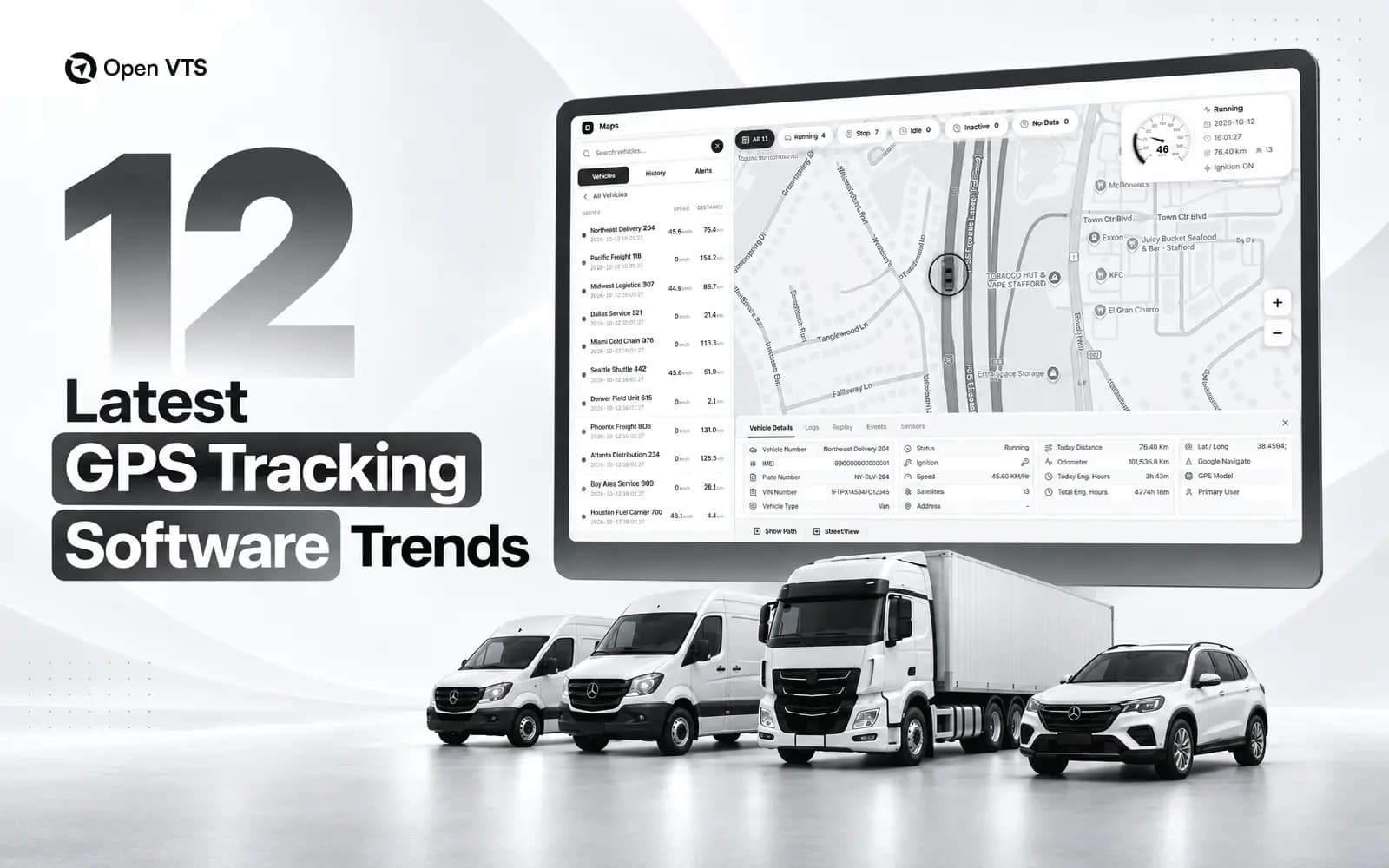
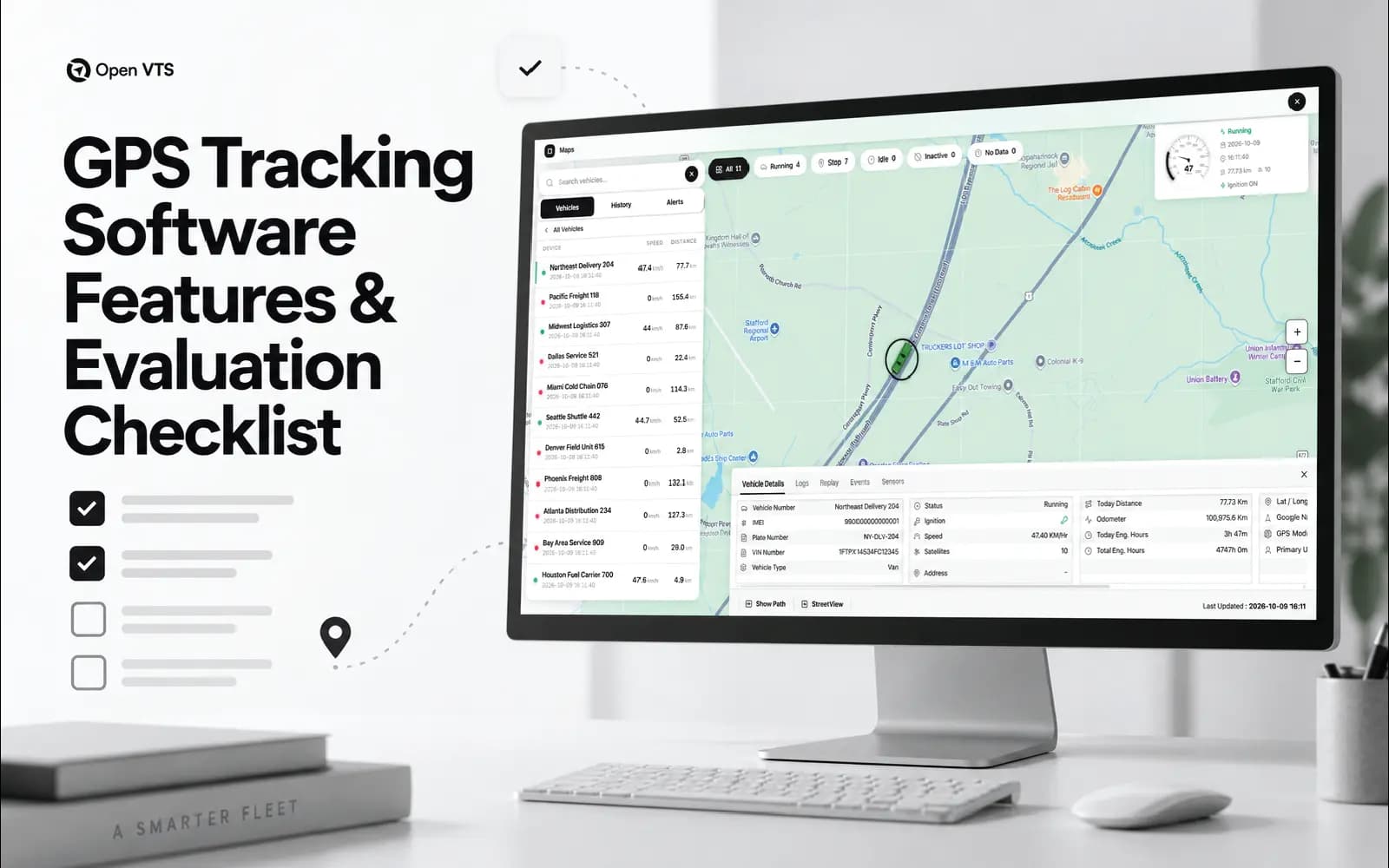
15 Advantages of White Label GPS Tracking Software for Growing GPS Businesses
Your brand can win the customer while somebody else’s technology does the heavy lifting underneath. That is the appeal of white-label GPS tracking software. Instead of building the entire tracking stack from zero, a growing GPS business can start from an established foundation and focus on the commercial experience around it. But white label does not automatically mean technology ownership or unlimited control. Its value depends on what the platform lets you brand, integrate, operate, and retain as the business grows.
What Is White Label GPS Tracking Software?
White-label GPS tracking software is an existing tracking platform another business can present under its own identity. Depending on the agreement, this may include a branded portal, domain, mobile applications, and admin controls. The underlying tracking engine is still supplied by the technology provider. The business value is simple: reuse proven infrastructure below the surface while building your own customer relationship above it.
Speed and Capital Efficiency
1. Faster Path to Market
White labelling can remove large categories of product engineering from the launch plan. Instead of first building core tracking modules, the business can configure an existing foundation and move sooner into device validation, onboarding, sales, and service. Launch speed still depends on branding, integrations, testing, and commercial readiness.
2. Lower Upfront Engineering Burden
Core tracking software requires backend, frontend, databases, protocol decoders, real-time delivery, security, and ongoing maintenance. Reusing those layers can reduce the engineering effort required before serving customers. The advantage is not “no technical work”; it is avoiding the need to create every commodity layer yourself.
3. Earlier Market Validation
Building less before launch lets a company test its offer sooner. It can learn whether customers value its pricing, service, hardware choices, or workflows before funding a long proprietary build. That reduces the risk of building extensively before proving demand.
4. More Resources for Sales and Service
Resources not consumed by core-platform development can move toward acquisition, onboarding, support, and partnerships. These functions often shape the customer relationship more directly than who wrote the tracking engine.
Brand and Commercial Control
5. A Consistent Customer-Facing Brand
White labelling can extend your identity across the portal, domain, colours, logos, and where included mobile applications and communications. The advantage is not cosmetic branding alone. It is a consistent experience in which the tracking service feels like part of your company.
6. Stronger Ownership of the Customer Relationship
When customers log into your service, contact your support team, and buy packages from your company, you remain at the centre of the relationship. Brand control, however, is not the same as ownership of the underlying software.
7. More Freedom in Packaging and Pricing
A suitable partner model may allow plans based on vehicle count, service level, integrations, or market segment. This gives commercial teams room to match pricing to the value they deliver. Exact freedom depends on the license and partner agreement.
8. A More Professional Launch Experience
Customers judge the whole experience, from login to support. Starting with a mature interface can be stronger than exposing early customers to an unfinished internal MVP, but it should still be tested under real operating conditions.
Product Capability Without Rebuilding the Stack
9. Access to a Mature Tracking Foundation
A mature platform can provide core tracking, history, alerts, reports, permissions, and fleet administration before the reseller builds those modules. Product effort can then move toward business-specific workflows rather than standard tracking functions.
10. Broader Hardware Choice
Protocol support determines which trackers a GPS business can sell. A broad compatibility catalogue reduces the need to develop every decoder internally, but each planned tracker, sensor, command, and telemetry field should still be validated before sale.
11. Mobile Experience Without Starting From Zero
A white-label arrangement may provide an existing mobile application or mobile-ready foundation that can be rebranded instead of building separate mobile products from the beginning. Publishing rights, branding scope, and fees should be confirmed rather than assumed.
12. Multi-Customer Administration
Growing providers need more than maps. They need customer hierarchies, roles, permissions, device administration, and account separation. A platform designed for multi-customer operations can remove significant reseller administration that would otherwise need to be built around the product.
13. APIs and Integration Headroom
APIs let the business differentiate outside the tracking engine. Customer portals, enterprise workflows, automation, and specialized applications can connect without rewriting vehicle tracking itself. This is where white labelling can move beyond rebranding into a broader product strategy.
Growth Without Rebuilding Everything Again
14. Shared Core Maintenance Burden
With the right agreement, the platform provider maintains core technology while the GPS business concentrates on customers and differentiation. This can reduce the burden of platform updates, security work, and protocol maintenance. The advantage depends on clearly defined update, support, and lifecycle terms.
15. Easier Expansion Across Customers and Verticals
A reusable foundation can support new customer groups without creating a separate tracking system for each one. Hardware, workflows, and integrations can change while the core technology remains. White labelling itself does not guarantee scale; infrastructure, licensing, database performance, and support capacity still matter.
The 15 Advantages Depend on What You Actually Control
Before choosing a platform, verify the control boundary. Branding is only one part of the decision.
| Verify | Why it matters |
|---|---|
| Brand and customer rights | Clarifies what can carry your identity and who owns the commercial relationship |
| Data and hosting model | Shows where operational data resides and what you can export |
| APIs and device support | Protects integration and hardware flexibility |
| Mobile, updates and exit terms | Defines publishing, lifecycle support and what happens if the relationship ends |
Where Open VTS Fits
Open VTS supports reseller, integration, and white-label/OEM relationships, including rebranding of the platform, dashboards, and mobile applications under partner identity. It also provides self-hosted deployment, 1,639+ published device integrations across 260+ protocols, and 426 documented REST endpoints with real-time interfaces. White-label mobile and web applications are commercially scoped rather than included automatically. Open VTS also separates control of infrastructure, operational data, configuration, and integrations from source-code ownership: the main-platform source code is not included by default.
Build the Brand Above the Technology
The strongest white-label strategy does not hide weak service behind a new logo. It uses established technology to remove undifferentiated engineering work, then invests that saved attention in customer experience, vertical expertise, support, integrations, and commercial execution. The platform should make the underlying technology less important to the customer and make your business more valuable. White label can provide the foundation; the business still has to be built above it.