
White label GPS tracking software lets you sell vehicle tracking under your own brand without building the full platform from zero.
That sounds simple.
But there is a bigger story behind it.
White label is not only about adding your logo to a dashboard. It is about building a GPS tracking business, serving fleet customers, creating recurring revenue, and controlling the customer relationship.
White label GPS tracking software is a ready-made GPS tracking platform that you can rebrand and sell as your own. It usually includes live tracking, route history, geofencing, alerts, reports, customer management, mobile apps, and device support. In 2026, the strongest model is not just white label. It is white label with ownership — your brand, your server, your data, and your rules.
That is the angle OpenVTS stands for.
Most platforms help you look like a GPS software company.
OpenVTS helps you build like one.
What Is White Label GPS Tracking Software?
White label GPS tracking software is a ready-made vehicle tracking platform that businesses can rebrand and sell as their own. Instead of building a GPS tracking system from scratch, you get an existing platform and customize it with your own business identity.
That includes:
- Your logo
- Your brand name
- Your custom domain
- Your customer accounts
From the customer’s perspective, the platform looks completely like your own software.
Behind the scenes, the system already includes essential tracking features such as:Real-time vehicle tracking Route history Reports and analytics Alerts and notifications Maps and dashboards User management GPS device connectivity
In simple terms, white label GPS tracking software helps businesses launch their own GPS tracking brand without developing the entire platform from scratch.
How White Label GPS Tracking Software Works
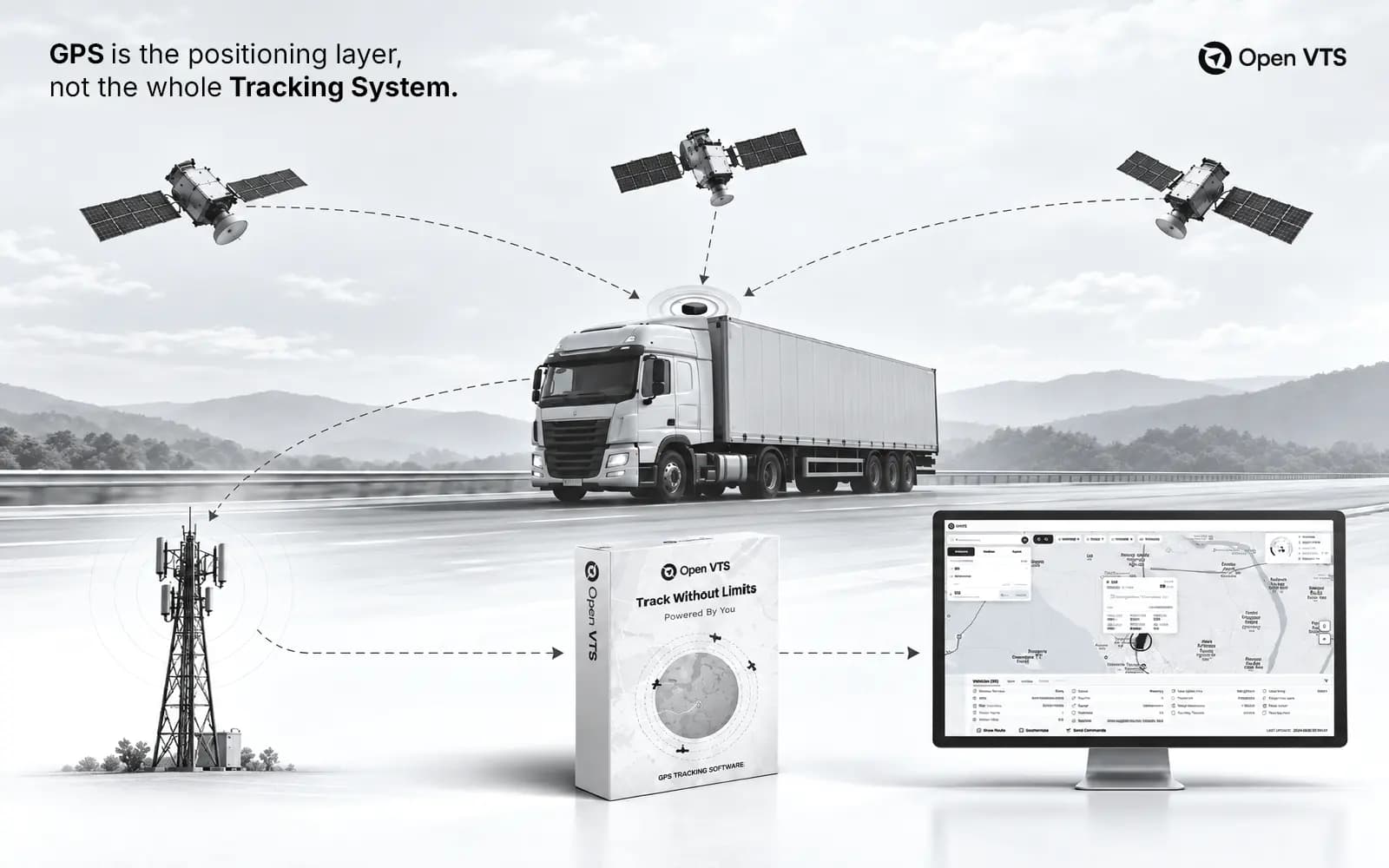
White label GPS tracking software works through a full system. It is not only a dashboard. It includes hardware, networks, servers, databases, maps, alerts, and user accounts.
The basic flow looks like this:
GPS device → mobile network → GPS server → database → branded dashboard → customer login
Step 1: GPS Device Is Installed in the Vehicle
A GPS device is installed in a vehicle, truck, bus, bike, machine, or asset. The device collects location and movement data.
It can collect:
- Latitude
- Longitude
- Speed
- Time
- Direction
- Ignition status
- Battery status
- Odometer
- Engine hours
- Sensor data
The device gets its position using GPS satellite signals. GPS.gov describes GPS as a satellite-based system that provides positioning, navigation, and timing services worldwide. It is used across transport, communication, safety, and many business systems.
Step 2: The Device Sends Data to the Server
The GPS device sends data through a mobile network.
This may use:
- GPRS
- 4G
- LTE
- NB-IoT
- Satellite connectivity
The device sends small data packets. Each packet tells the server something useful.
For example:
“This vehicle is moving at 52 km/h.”
Or:
“This vehicle stopped at this location.”
Or:
“Ignition turned off at 6:15 PM.”
The server receives this data. Then the software processes it.
Step 3: The Server Converts Raw Data into Useful Information
This is where many people misunderstand GPS tracking software. They think the map is the system.
It is not. The server is the heart. The server receives raw data from devices. It identifies the vehicle. It validates the packet. It stores the location. It checks alerts. It updates the dashboard.
A good server can handle thousands of vehicles. A weak server may lose data. That creates wrong route history, missing reports, and angry customers. GPS businesses fail not because they cannot sell. They fail because the platform cannot handle real-world device behavior.
- Vehicles go offline.
- Networks drop.
- Devices send delayed data.
- Drivers enter low-signal areas.
- A serious platform must handle this without breaking trust.
Step 4: Customers See the Branded Dashboard
After the data is processed, the customer sees it on your dashboard.
They can check:
- Live vehicle location
- Route history
- Trip replay
- Stoppages
- Speed
- Ignition
- Geofence events
- Alerts
- Reports
- Drivers
- Vehicles
- User roles
This dashboard carries your brand, which is the most visible benefit of white label software. But the bigger value is what happens behind the scenes — your platform becomes part of your customer’s daily operations. They may open it every morning, check reports throughout the week, and rely on alerts every single day. Over time, this creates stronger customer trust, better retention, and long-term brand stickiness.
Who Needs White Label GPS Tracking Software?
White label GPS tracking software is ideal for businesses that want to sell GPS tracking services under their own brand. It is also a strong fit for companies that already work with fleet owners and want to expand their offerings without building software from scratch.
You do not need to be a large software company to start. What matters more is having a clear target market, reliable service, and the ability to support your customers effectively.
GPS Tracking Service Providers
This is one of the most common use cases for white label GPS tracking software.
GPS tracking service providers sell tracking solutions to businesses that manage vehicles and field operations. Their customers may include:
- Transport companies
- Delivery fleets
- School bus operators
- Construction fleets
- Vehicle rental companies
- Taxi and cab services
- Field service teams
- Security patrol businesses
With a white label platform, the provider can offer the software under their own brand name instead of promoting another company’s platform. This helps them build stronger customer relationships, increase brand value, and maintain full control over their business identity.
GPS Device Sellers
Many businesses already sell GPS tracking hardware, but hardware alone often creates limited long-term revenue. A GPS device is usually a one-time sale, while software creates recurring value and ongoing customer relationships.
With a white label GPS tracking platform, device sellers can offer a complete tracking solution that includes:
- GPS tracking devices
- SIM cards and connectivity
- Device installation
- Tracking software
- Customer support
- Reports and analytics
- Annual renewals or subscriptions
This creates a much stronger business model. Instead of being only a hardware seller, the business becomes a complete fleet technology provider with recurring revenue opportunities.
IT Companies and Software Agencies
Many IT companies already work with local businesses by providing websites, mobile apps, ERP systems, or automation solutions. White label GPS tracking software can become an additional high-value service for these businesses.
For example, an IT company can offer GPS tracking solutions to logistics or transport clients and integrate tracking data with billing systems, dispatch software, or customer portals. This not only creates larger project opportunities but also generates recurring monthly revenue.
Vehicle Security Businesses
Vehicle security companies already sell products such as alarms, immobilizers, cameras, and anti-theft systems. GPS tracking naturally fits into these services because customers already prioritize vehicle safety and monitoring.
By adding a white label GPS tracking platform, these businesses can offer a complete branded security solution instead of promoting a third-party software provider.
Telecom and SIM Providers
Telecom and SIM card providers can also benefit from white label GPS tracking software. Since GPS tracking devices require internet connectivity, telecom companies can bundle SIM cards together with tracking services.
This works especially well for fleet operators, logistics companies, and IoT-based businesses. Instead of selling only connectivity, the provider delivers a complete solution that includes hardware, network access, and tracking software from a single source.
Key Features of White Label GPS Tracking Software
A white label GPS tracking platform should do more than just display your brand name. It must deliver a smooth, reliable experience every day because customers will judge your business based on the software they use.
If the platform is slow, your brand feels unprofessional. If route history is inaccurate or alerts arrive late, customers lose trust in your service. That is why reliability matters just as much as features.
Branding Features
Branding is one of the biggest reasons businesses choose white label GPS tracking software. A good platform should allow you to customize:
- Logo
- Brand name
- Login page
- Custom domain
- Dashboard colors
- Email templates
- Reports
- Mobile app branding
- Support contact details
These features help customers feel they are using your own platform, not a third-party service. Over time, this builds stronger brand recognition and customer loyalty.
However, branding alone is not enough. A logo on top of a poor-quality dashboard will not create trust. The overall user experience must also feel professional and polished.
Fleet Tracking Features
The platform should also include the core tracking features businesses expect from modern fleet management software, such as:
- Live GPS tracking
- Vehicle status monitoring
- Route history
- Trip playback
- Geofencing
- Speed alerts
- Ignition status
- Idle time tracking
- Stoppage reports
- Distance reports
- Odometer tracking
- Engine hours monitoring
- Driver behavior analysis
- Maintenance reminders
The demand for these solutions is growing rapidly. According to Fortune Business Insights, the fleet management software market is projected to grow from USD 38.28 billion in 2026 to USD 152.89 billion by 2034. This growth shows that businesses are investing heavily in smarter and more digital fleet operations.
For white label GPS tracking providers, this is a strong opportunity — because the demand for fleet tracking technology continues to grow every year.
Reports and Analytics
Reports are where customers start seeing the real business value of GPS tracking software. Live maps may look impressive at first, but reports are what help businesses improve operations over time.
A strong reporting system helps customers answer important questions like:
- Which vehicle traveled the most?
- Which driver stopped for too long?
- Which route wasted time?
- Which vehicle consumed more fuel?
- Which trips were delayed?
- Which vehicles need maintenance?
- Which drivers frequently overspeed?
Good reports help businesses reduce costs, improve efficiency, and make better decisions. This also increases customer satisfaction and makes renewals easier. On the other hand, weak reporting makes the platform feel incomplete and less valuable.
Alerts and Notifications
Alerts help customers respond quickly to important events. Common GPS tracking alerts include:
- Overspeed alerts
- Geofence alerts
- Ignition alerts
- Power cut alerts
- Device offline alerts
- Long stoppage alerts
- SOS alerts
- Tow alerts
- Route deviation alerts
- Maintenance reminders
The best platforms allow users to control which alerts they receive and where they want to receive them. Notifications may be delivered through:Dashboard notifications Email Mobile push notifications SMS WhatsApp Webhooks
Too many unnecessary alerts create confusion. Smart and customizable alerts create better control and a better user experience.
Customer and Dealer Management
White label GPS tracking software should also support business operations at scale. As your customer base grows, proper management features become essential.
A strong platform should support:
- Customer accounts
- Admin users
- Sub-users
- Vehicle groups
- Dealer hierarchy
- Role-based access
- Subscription plans
- Renewal management
- Billing records
- Support access
- Device assignment
Managing a small fleet is simple. Managing thousands of vehicles across multiple customers requires a structured system.
Device Compatibility
Device compatibility is another major factor when choosing a white label GPS tracking platform.
Some platforms only support specific GPS trackers, which can limit your flexibility and increase dependency on a single vendor. A better solution should support multiple GPS devices and communication protocols.
This gives businesses the freedom to choose hardware based on pricing, quality, region, or customer requirements. It also reduces supplier dependency and helps businesses scale more efficiently over time.
SaaS White Label vs Self-Hosted White Label GPS Tracking Software
This is one of the most important decisions when choosing a white label GPS tracking platform.
At first glance, many platforms look similar. They offer branded dashboards, maps, customer accounts, and tracking features. But behind the scenes, the business model can be completely different.
There are two main types of white label GPS tracking software:
- SaaS white label GPS software
- Self-hosted white label GPS software
Both models can work well, but they offer very different levels of control, flexibility, and ownership.
SaaS White Label GPS Software
In the SaaS model, the vendor hosts and manages the entire platform. You typically get branding options such as your logo, custom domain, and customer accounts, while the provider handles the infrastructure and maintenance.
This model is popular because it is:
- Faster to launch
- Easier to manage
- Less technical for beginners
- Lower in initial setup effort
However, the vendor usually controls important parts of the system, including:
- Pricing structure
- Server infrastructure
- Data storage
- Feature updates
- Device compatibility
- API access
- Customization limits
- Backup and migration policies
This approach can help businesses start quickly, but it may create long-term dependency on the platform provider.
Self-Hosted White Label GPS Software
Self-hosted white label GPS software works differently.
Instead of relying on the vendor’s servers, you deploy the platform on your own server or cloud infrastructure. This gives your business much greater control over the entire system.
With a self-hosted setup, you control:
- The server and infrastructure
- Fleet and customer data
- Platform access and security
- Integrations and APIs
- Custom development
- Business rules and scalability
This model is designed for businesses that want more flexibility, ownership, and long-term independence.
For example, OpenVTS focuses on a self-hosted approach that gives businesses control over their tracking platform, data, and infrastructure. The platform highlights features such as server ownership, hardware independence, API access, customization, and white label readiness.
That creates a major difference in mindset.
With basic SaaS white labeling, you are mainly rebranding someone else’s system.
With self-hosted white labeling, you are building your own tracking business on infrastructure you control.
The Business Model: How White Label GPS Tracking Makes Money
White label GPS tracking software is attractive because it creates recurring revenue. Instead of making only one-time hardware sales, businesses can generate ongoing income through software subscriptions and tracking services.
The model is simple — customers pay monthly or yearly to use the platform, and revenue grows as more vehicles are added.
However, long-term profitability depends on several factors, including:
- Platform costs
- Customer support quality
- Service reliability
- Customer retention
Common Revenue Models
Businesses can sell white label GPS tracking services in different ways depending on their market and target customers.
Common revenue models include:
- Monthly per-vehicle subscription
- Annual per-vehicle subscription
- GPS device + software bundle
- Installation charges
- SIM card + software package
- Premium support plans
- Industry-specific solutions
- Dealer or reseller programs
- White label platforms for sub-resellers
For example, some businesses charge customers a monthly fee for each tracked vehicle, while others offer yearly tracking packages that include hardware, installation, connectivity, and software access.
The best pricing model depends on the target market.
In price-sensitive markets, annual plans and bundled packages often work well. In enterprise markets, customers usually care more about reliability, support quality, and operational stability than simply choosing the cheapest option.
The Hidden Cost Problem
Many white label GPS tracking businesses focus only on how much they can charge customers. But they often ignore an equally important factor — platform cost.
This becomes a problem when the software vendor charges per vehicle. In the beginning, the cost may seem manageable. But as your business grows, your expenses grow with it.
- At 50 vehicles, the cost may feel small
- At 500 vehicles, it becomes noticeable
- At 5,000 vehicles, it can significantly affect profitability
This is one reason why self-hosted GPS tracking platforms are becoming more attractive. They give businesses greater control over infrastructure, pricing, and long-term operating costs.
They also reduce dependency on another company’s pricing decisions and platform limitations.
How to Choose the Best White Label GPS Tracking Software
Choosing the wrong GPS tracking platform can damage your brand because customers will blame your business — not the hidden software vendor behind it. That’s why selecting the right platform is critical.
Do not judge a platform only by screenshots or sales promises. Test it like a real customer.
Check Branding Control
A good white label platform should allow complete branding, including:
- Custom logo and domain
- Branded login page
- Custom reports and emails
- Branded mobile app
- Customer management under your brand
Partial branding often looks unprofessional and weakens customer trust.
Check Hosting and Data Control
Before choosing a platform, ask important questions like:
- Who owns the data?
- Can you export customer data?
- Can you host the platform yourself?
- Can you use your own server and backup system?
- What happens if you stop using the vendor?
These questions become extremely important as your customer base grows.
Test Real Tracking Performance
Do not rely only on demo dashboards. Test the platform in real-world conditions:
- Live tracking accuracy
- Route playback
- Alerts and notifications
- Weak network performance
- Delayed data handling
- Reports and trip history
A platform may look good visually but still perform poorly in daily operations.
Check API and Integrations
Modern GPS tracking software should connect with tools like:
- ERP and CRM systems
- Dispatch software
- Billing platforms
- Customer portals
- WhatsApp alerts
- Maintenance systems
Strong API support helps businesses build custom workflows and integrations as they grow.
Check Mobile Experience
Most users now depend heavily on mobile devices. The mobile app should feel fast, simple, and reliable for fleet managers, drivers, and customers.
A poor mobile experience can negatively affect your brand perception.
Check Support and Documentation
White label GPS tracking is not just software — it becomes part of your business foundation. Good documentation, setup guides, troubleshooting support, and training resources are essential for long-term success.
Why OpenVTS Is Different for White Label GPS Tracking
Most white label GPS tracking platforms focus on branding. OpenVTS focuses on ownership — and that creates a major difference.
Branding helps customers recognize your business, but ownership gives you long-term control over your platform, data, pricing, and future growth.
Many white label platforms only provide the front layer:
- Your logo
- Your domain
- Your customer accounts
But the core system still belongs to the vendor.
OpenVTS takes a different approach by giving businesses control over:Their own server Their own data Custom integrations Platform rules Customer management Long-term scalability
Build Faster Without Losing Control
Building a GPS tracking platform from scratch takes significant time and resources. You need dashboards, maps, alerts, reports, APIs, device protocols, mobile apps, and infrastructure management.
Traditional white label software helps businesses launch faster, while self-hosted platforms provide more control.
OpenVTS combines both ideas — helping businesses launch quickly without becoming fully dependent on a third-party platform.
Best Fit for OpenVTS
OpenVTS is a strong fit for:
- GPS tracking startups
- GPS device sellers
- Fleet service providers
- IT and software companies
- Vehicle security businesses
- Logistics technology companies
- White label GPS resellers
- Large fleet operators
The platform also supports industries such as logistics, construction, mining, agriculture, school transportation, EV fleets, security patrol, and field service operations.
A Stronger Positioning
Most white label GPS tracking platforms help businesses sell under their own brand.
OpenVTS focuses on helping businesses build under their own control.
That positioning shifts the conversation from simple branding to long-term ownership and scalability.
Final Takeaway
White label GPS tracking software is one of the fastest ways to start a GPS tracking business. It gives businesses a ready-made platform that can be sold under their own brand with features like live tracking, route history, alerts, reports, and mobile access. But in 2026, choosing a platform is not only about branding. The real question is whether the platform can support long-term business growth with proper control, scalability, and flexibility.
Some white label platforms only offer surface-level branding, while others provide deeper ownership over infrastructure and data. For small experiments, SaaS white label software may be enough. But for businesses that want long-term independence, self-hosted white label platforms offer a stronger foundation. That is where OpenVTS positions itself differently — helping GPS businesses build with more ownership, flexibility, and control instead of relying forever on rented infrastructure.